
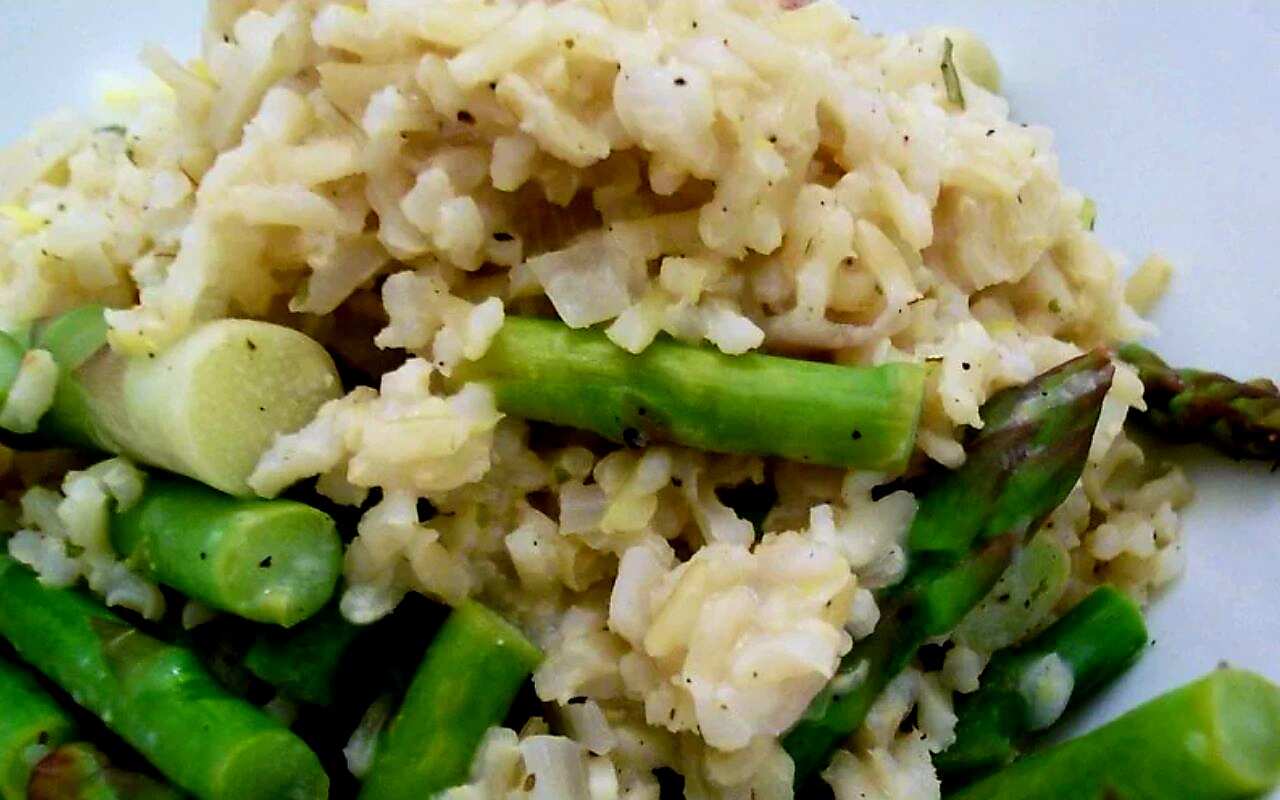
If you’re looking for a fresh, comforting one-pot Italian dinner that tastes like restaurant food yet is easy to make at home, the “Creamy Asparagus Risotto Recipe” is perfect for you. It tastes like restaurant food and is easy to make at home.
Table of Contents
Creamy Asparagus Risotto Recipe : One-Pot Italian Dinner
Asparagus Risotto is a perfect choice. Savory, creamy, and bursting with fresh asparagus. It’s a classic-inspired Italian rice dish that makes a great spring dinner, a satisfying vegetarian meal, or a delicious side dish for chicken, salmon, or roasted vegetables.
Unlike typical rice recipes, risotto gets its signature creamy texture from slowly cooking
short-grain rice and gradually adding hot broth. The rice releases its natural starches as it cooks, creating a silky sauce without the need for heavy cream.
Fresh asparagus has a bright, slightly sweet flavor and a soft, crisp texture. Parmesan cheese, butter, garlic, and a hint of lemon complement this dish perfectly.
Whether you’re cooking a comforting weeknight meal or planning to entertain guests, this easy asparagus risotto is a delicious dish that’s a fun addition to your dinner rotation.
Why we love Creamy Asparagus Rissetto
- It gives a creamy and delicious finishing touch at home
- Creamy and delicious
- Full flavor from fresh vegetables
- Cooked in a one-pan meal
- Vegetarian-friendly
- Restaurant-style taste at home
- Easy to customize
- Perfect for spring
All the ingredients needed to make the Creamy Asparagus Rissetto recipe:
Ingredients for the Rissetto:
- 5 cups vegetable or chicken broth
- 3 garlic cloves, finely chopped
- 3 tablespoons unsalted butter
- 2 tablespoons chopped fresh parsley
- 2 tablespoons olive oil
- 1 1/2 cups Arborio rice
- 1 pound fresh asparagus
- 1 small yellow onion, finely chopped
- 1 tablespoon fresh lemon juice
- 1 teaspoon lemon zest
- 1/4 teaspoon freshly ground black pepper
- 1/2 teaspoon salt or to taste
- 1/2 cup dry white wine, optional
- 3/4 cup freshly grated Parmesan cheese
- Extra Parmesan cheese, for serving
Ingredients for garnish:
- Fresh parsley
- Lemon wedge
- Freshly chopped black pepper
- Parmesan shavings
- A light drizzle of extra virgin olive oil
Choosing the best asparagus rissetto:
- To make this creamy asparagus rissetto recipe, choose asparagus with firm, bright green stems, without soft or wilted ends. Instead, choose small stems.
- Thin asparagus cooks quickly and has a delicate texture, while thicker stems are more flavorful. The asparagus tastes great on both sides.
- Before cooking, wash the asparagus thoroughly and cut off the woody ends. Cut the stalks into small pieces. Keep the ends aside as they are used later in the cooking process.
How to Make Creamy Asparagus Risotto Recipe: Full Instructions:
1. Preparing the Asparagus
- First, wash the asparagus thoroughly.
- Cut off the tough end at the bottom.
- Cut the stem into approximately 1-inch pieces. Keep the pieces separate.
- Use a small saucepan.
- Bring water to a boil. Add the asparagus pieces and cook for 2 minutes.
- During the last 50 to 60 seconds, add the heads.
- Drain the water and immediately rinse the asparagus thoroughly under cold water to stop the cooking process.
- Drain the water again and set it aside.
- This very quick blanching step maintains the asparagus’s bright color, preventing it from becoming too soft in the Risotto.
2. Heating the Broth
- Use a saucepan to heat the vegetable or chicken broth, add it, and place it over low heat.
- The broth should be kept hot throughout the cooking process.
- It does not need to be brought to a boil.
- Slowly adding the hot broth ensures even cooking of the rice and prevents the temperature of the risotto from dropping too much with each addition of liquid.
3. Sautéing the Onions and Garlic
- Use a large, wide pan or heavy-bottomed saucepan.
- Place it on medium heat.
- Add olive oil and a tablespoon of butter.
- Add the chopped onion.
- Stir for about 4 minutes, until it becomes soft and translucent.
- Add the finely chopped garlic and cook for another 30 seconds.
- Be careful not to brown or burn the garlic, as it will become bitter.
4. Toasting the Arborio Rice
- Add the Arborio rice to the pan.
- Stir it constantly for 2 minutes.
- The edges of the rice should be lightly toasted, but remain light in color.
- Toasting the rice deepens its flavor and maintains the grainy texture during slow cooking.
5. Adding the Wine
- If using, add dry white wine.
- When the wine comes to a boil, stir the rice constantly and continue cooking until most of the liquid has evaporated.
- If you don’t use wine, simply add warm broth instead.
6. Begin adding the hot broth
- Add about 3/4 cup of hot broth to the rice.
- Stir slowly and repeatedly until the rice has absorbed most of the liquid.
- As you absorb most of the broth, add 1/2 to 3/4 cup at a time.
- Continue this process slowly, making sure to let the broth evaporate each time.
7. Continue cooking
- Continue cooking for 20 to 22 minutes, stirring occasionally.
- The rice should be creamy on the outside, while remaining slightly firm in the center.
- You may not need exactly 5 cups of broth.
- Add as much as needed until the rice reaches the desired consistency.
- The finished risotto should be loose and creamy, rather than dry or hard.
8. Add the asparagus
- When the rice is almost cooked, gently stir in the asparagus. Continue cooking for about 3 minutes more, until the asparagus is heated through.
- Avoid overcooking the asparagus.
- It should be moist and slightly chewy.
9. Finishing with Butter and Parmesan
- Remove the pan from the heat.
- Add the remaining 2 tablespoons of butter and freshly grated Parmesan cheese.
- Continue stirring slowly until the butter and cheese have melted into the risotto.
- Add the lemon zest and fresh lemon juice.
- Add fresh and freshly ground black pepper.
- Taste, then adjust the seasoning if needed.
10. Resting and Serving
- Let the risotto rest for about 2 minutes.
- Gently stir once more.
- If it seems too thick, add a little hot broth to thin it out.
- Transfer to a bowl and garnish with fresh parsley, extra Parmesan, and a little freshly ground black pepper.
- Serve immediately while the risotto is still creamy and hot.
What’s the secret to a creamy asparagus risotto recipe?
- The secret is patience!
- Risotto turns out so creamy because Arborio rice releases starch as it cooks.
- Adding broth slowly and constantly stirring the rice releases those starches into the surrounding liquid.
- Adding all the broth at once is a good idea.
- Slowly adding it maintains its characteristic creamy consistency.
- Another important thing is to avoid overcooking the rice.
- Well-cooked risotto should be creamy and soft, with a slight firmness in the center.
Tips for making the perfect asparagus risotto:
- Be sure to use Arborio rice for creamy asparagus risotto.
- Arborio rice is readily available in US grocery stores and is a great choice for risotto because it contains a lot of starch.
- The broth should be kept warm.
- Avoid rushing the process.
- Always stir it.
- Avoid making it too dry.
- Use freshly grated Parmesan cheese.
- Add lemon at the end.
Some Asparagus Risetto Variation Suggestions:
To make the Creamy Asparagus Risetto recipe, if you prefer a different flavor, check out these suggestions.
Mushroom Asparagus Risetto:
Sauté chopped mushrooms with onions before adding the rice, which gives it a deeper and earthier flavor.
Lemon Asparagus Risetto:
For a particularly fresh and bright version, increase the lemon zest and a little juice.
Shrimp Asparagus Risetto:
Cook the marinated shrimp separately and add it to the finished Risetto.
Chicken Asparagus Rissetto:
For a more filling meal, add chopped and cooked chicken at the end.
Spring Vegetable Rissetto:
Add fresh spinach, peas, or zucchini to the asparagus rissetto.
Vegan Asparagus Rissetto: Use vegetable broth and replace the butter and Parmesan with plant-based alternatives or nutritional yeast.
Serving Suggestions for Asparagus Risotto:
Asparagus Risotto can be served as a completely vegetarian meal, but it pairs well with many proteins and vegetables. Try serving it with them:
Baked Salmon
Grilled Chicken Breast
Garlic Shrimp
Roasted Chicken
Pan-Seared Scallops
Grilled Vegetables
Roasted Brussels Sprouts
Simple Green Salad
For a light dinner, dress the risotto with lemon vinegar. Serve with a fresh salad.
Storage Suggestion for Creamy Asparagus Risotto:
Cool leftover asparagus risotto to room temperature and then store it in an airtight container.
You can keep it in the refrigerator for up to three days.
Risotto thickens as it cools, so it won’t have the same consistency the next day.
To reheat, for best results, place the risotto in a saucepan over low to medium heat.
Add a little broth or water and stir slowly as it heats up, gradually adding the liquid until the asparagus risotto becomes creamy again.
Reheating over high heat should be avoided, as this can cause the rice to become dry and sticky.
FAQ
Answers to questions about the Creamy Asparagus Rissetto recipe so you can easily make this breakfast delight at home.
Q. Can I make asparagus rissetto without wine?
Absolutely! Wine is optional; just substitute it with hotter vegetable or chicken broth.
Q. What rice is best for asparagus rissetto?
Arborio rice is a great and easy option for making asparagus rissetto at home. Carnaroli rice is a great option if you can find it.
Q. Can I use frozen asparagus?
Absolutely! If you don’t have fresh asparagus, frozen asparagus also works great. Thaw it first, drain it, and add it at the end of cooking.
Q. Can I make the recipe vegan?
Absolutely! Use vegetable broth and replace buttery Parmesan with a suitable plant-based alternative.
Q. Why isn’t asparagus risotto creamy?
For a few reasons! Using the wrong rice. Adding the liquid too quickly or cooking the rice too hot. Adding Arborio rice and slowly adding hot broth helps create the creamy texture associated with risotto.
Final Thoughts
The Creamy Asparagus Risotto recipe is incredibly easy to prepare, transforming simple ingredients into a luxurious and comforting meal. The combination of tender asparagus, creamy Arborio rice, Parmesan, butter, garlic, and fresh lemon creates a balanced dish that’s rich without being overly heavy.
For best results, keep the broth warm, add it slowly, stir frequently, and serve the risotto immediately after cooking.
If you’re making a vegetarian dinner on a weeknight, whipping up something special for guests, or simply enjoying a homemade asparagus risotto, this is a delicious way to bring a truly Italian-inspired comfort food to your table.