
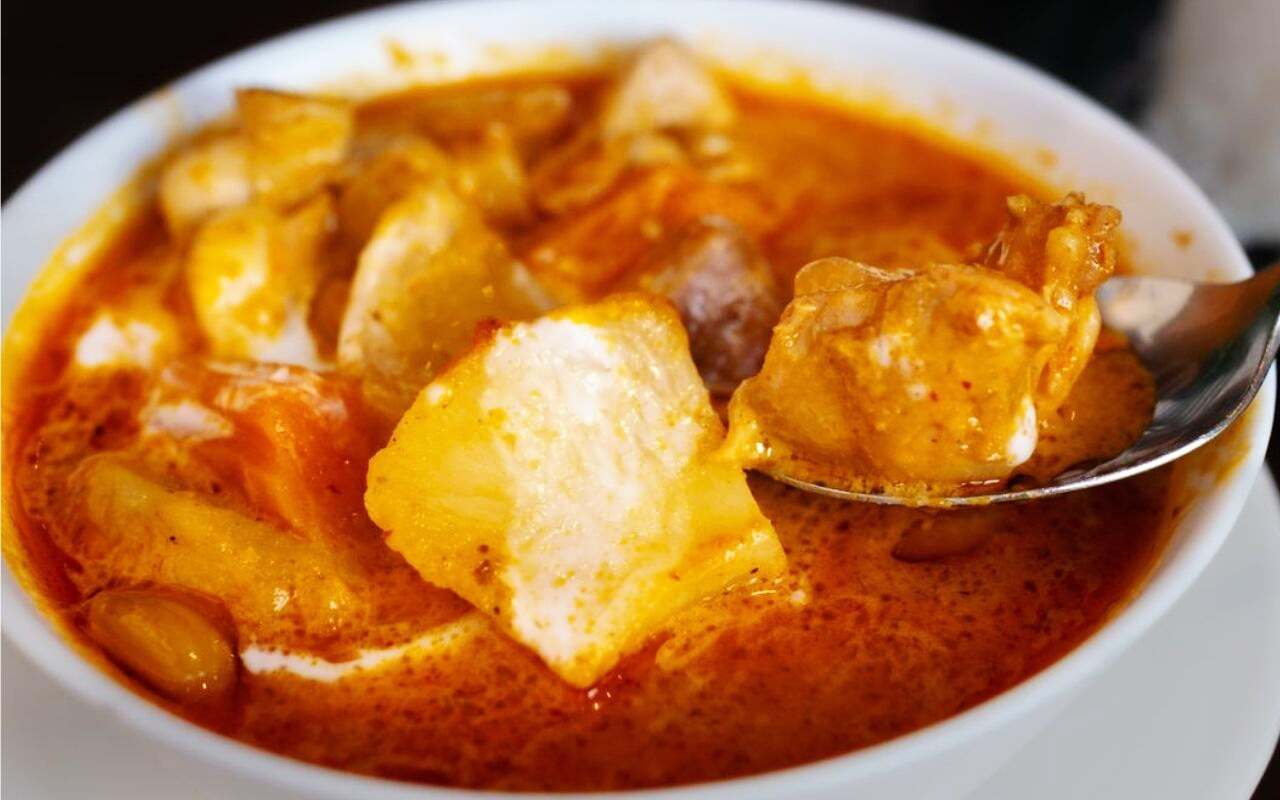
If you’re looking for a wonderful and comforting one-pan dinner, “Creamy Thai Chicken Panang Curry” is perfect for you. It’s a creamy, delicious, and slightly spicy dinner.
Table of Contents
Creamy Thai Chicken Panang Curry: One-Pan Dinner
Chicken Panang Curry is a delicious recipe you’ll want to make again and again. Tender chicken pieces are cooked in a silky coconut curry sauce with panang curry paste, ginger, garlic, lemon, and a slight sweetness, resulting in a restaurant-style Thai-inspired dinner.
It’s incredibly easy to prepare in your kitchen and offers a contrast to many Thai dishes that emphasize spiciness. Panang curry is known for its creamy, rich, slightly sweet, nutty, and aromatic flavor. Served with steamed jasmine rice, it’s absolutely delicious.
It’s a great weeknight meal for families or a great dinner for guests.
Why You’ll Love Chicken Panang Curry:
- Tender, juicy chicken in every bite
- Rich and creamy coconut curry sauce
- Delivers a salty, sweet, sour, and slightly spicy flavor.
- Easy to prepare in one pan
- Tastes even better the next day
- Perfect for busy weeknight dinners
- Delicious with jasmine or basmati rice
- Easy to customize with vegetables
All Required Ingredients:
Main Ingredients:
- 4 to 5 fresh Thai basil leaves, plus more for serving
- 3 tablespoons Panang curry paste
- 2 teaspoons fresh lime juice
- 2 garlic cloves, finely chopped
- 1 kaffir lime leaf, thinly sliced - optional
- 1 red bell pepper, thinly sliced
- 1 tablespoon vegetable oil or avocado oil
- 1 1/2 pounds boneless and skinless chicken thighs or chicken breast, thinly sliced
- 1 can full-fat coconut milk
- 1 tablespoon creamy peanut butter
- 1 tablespoon brown sugar
- 1 tablespoon fish sauce
- 1 teaspoon fresh ginger, grated
- 1 red bell pepper, thinly sliced
- 1/2 cup chicken broth
- Salt to taste
Serving Ingredients:
- Fresh lime wedges
- Steamed jasmine rice
- Thinly sliced red pepper, optional
- Fresh Thai basil or cilantro
- Chopped peanuts
Full instructions on how to make Creamy Thai Chicken Panang Curry:
1. Preparing the Chicken
- Dry the chicken thoroughly with paper towels.
- Cut it into thin, bite-sized pieces.
- Chicken is especially good for Thai curry because it stays succulent when cooked over low heat. However, if you prefer leaner meat, boneless chicken breast is perfect.
- Be sure to lightly salt the chicken.
- Set it aside while you prepare the curry breast.
MORE RECIPE:-
Creamy Oven Baked Chicken And Rice Casserole
2. Heating the Pan
- Use a large skillet.
- Place a sauté pan or Dutch oven over medium-low heat.
- Heat the vegetable oil for about 30 seconds.
- Add a layer of shredded chicken, then cook for 4 minutes, stirring occasionally.
- Cook until lightly browned on the outside.
- There’s no need to cook the chicken all the way through at this stage, as it will cook well in the curry sauce.
- Remove the chicken to a plate.
3. Cooking the Aromatic Thing
- Reuse the same pan.
- Add finely chopped garlic and grated ginger.
- Cook for about 30 seconds, until fragrant.
- Be careful not to burn the garlic; reduce the heat slightly if needed.
- The lightly browned chicken left at the bottom of the pan adds extra flavor to the curry.
4. Adding the Panang Curry Paste
- Add the Panang curry paste to the pan.
- Stir constantly for 2 minutes.
- Cook the curry paste in the oil for a little longer.
- This releases the aroma of the spices and deepens the flavor of the curry.
- If you like spicy food, add more curry paste.
- For a milder, family-friendly version, start with two tablespoons and increase if needed.
5. Making the Coconut Curry Base
- Continuously stir the curry paste, then
- gradually add about half the coconut milk. Make sure to stir until the curry paste is thoroughly mixed into the coconut milk.
- Now add the remaining coconut milk and chicken broth.
- Keep stirring to form a smooth, creamy sauce.
6. Add Peanut Butter and Seasoning
- Combine peanut butter, brown sugar, and fish sauce.
- Peanut butter adds a slight nutty richness, enhancing the traditional flavor of Panang curry.
- Brown sugar helps balance the spicy and salty notes, while fish sauce adds a savory flavor.
- If you have an optional chopped kaffir lime leaf, add it.
- Continue simmering the sauce over low heat.
7. Return the chicken to the pan.
- Dip the lightly cooked chicken into the curry sauce.
- Gently stir to coat the chicken thoroughly.
- Reduce the heat to medium-low and continue simmering for about 8 to 10 minutes, or until the chicken is cooked through and the sauce thickens slightly.
- The coconut milk should not be brought to a boil, as simmering on low heat creates a smoother sauce.
8. Adding the Bell Peppers
- Add the chopped red peppers during the last 4 minutes of cooking.
- The bell peppers should be soft, but still slightly crunchy.
- If you prefer softer vegetables, you can cook them for a little longer.
9. Finishing with Lemon and Basil
- Turn off the heat.
- Add fresh lemon juice and basil.
- Taste the curry once and adjust the seasoning.
- Add the following:
- More lemon juice to enhance the brightness
- More brown sugar to add sweetness
- More fish to add saltiness
- More curry paste to add spiciness
- If the sauce is too thick, add a little coconut milk.
10. Garnish and Serve
- Pour the creamy chicken panang curry over fresh steamed jasmine rice.
- If desired, you can top it with chopped roasted peanuts, basil, cilantro, and thinly sliced red chilies.
- Serve immediately with a slice of fresh lemon and enjoy.
How to Make a Perfect Creamy Thai Chicken Panang Curry?
Use full-fat coconut milk.
Don’t forget to toast the curry paste.
Choose chicken thighs for more juiciness.
Be sure to balance the flavor.
Can I make Creamy Thai Chicken Panang Curry less spicy?
Absolutely! For a milder chicken panang curry, start with a smaller amount of curry paste. Add more coconut milk to reduce the spiciness.
A little brown sugar and peanut butter also greatly enhance the flavor.
If you’re cooking for children or someone who doesn’t like spice, omit the extra fresh chilies and serve them separately.
More Vegetables to Try:
You can use a few more vegetables to enhance and enhance Creamy Thai Chicken Panang Curry. This recipe focuses on the chicken and creamy panang sauce. These are options.
Green bell peppers
Red bell peppers
Snow peas
Broccoli
Green beans
Carrots
Mushrooms
Baby corn
Zucchini
Vegetables should be cut into similar-sized pieces, which ensures even cooking.
What should I serve with Chicken Panang Curry?
For creamy Thai chicken panang curry, the easiest pairing is steamed jasmine rice.
Fluffy rice absorbs the creamy sauce better.
You can serve chicken panang curry with the following, which works best:
- Brown rice
- Basmati rice
- Steamed vegetables
- Coconut rice
- Colorful rice
- Rice noodles
- Thai-style cucumber salad
- For a complete dinner, serve the curry with rice, a slice of fresh lemon, and a simple vegetable side.
Storage Tips:
- Allow leftover Creamy Thai Chicken Panang Curry to cool thoroughly before storing it in an airtight container.
- You can store it in the refrigerator for up to 4 days.
- The sauce thickens as it cools.
- When reheating, add a little water, chicken broth, or coconut milk and heat gently on the stovetop or in the microwave.
- Be careful not to overheat; the chicken may become dry and the coconut sauce will separate.
Final Thoughts
Creamy Thai Chicken Panang Curry is a comforting home-cooked dinner, delivering Thai-style rich flavors without any complex cooking techniques. Tender chicken, creamy coconut milk, aromatic curry paste, peanut butter, fresh lemon, and fragrant herbs make for a delicious skillet.
Serve it with jasmine rice for a super easy weeknight dinner, or add colorful vegetables when you’re looking for a more complete meal. Once you learn how to balance the sweet, salty, spicy, tangy, and creamy flavors, this recipe will surely become a regular part of your easy dinner rotation. So give it a try, and I’m sure it won’t disappoint.