
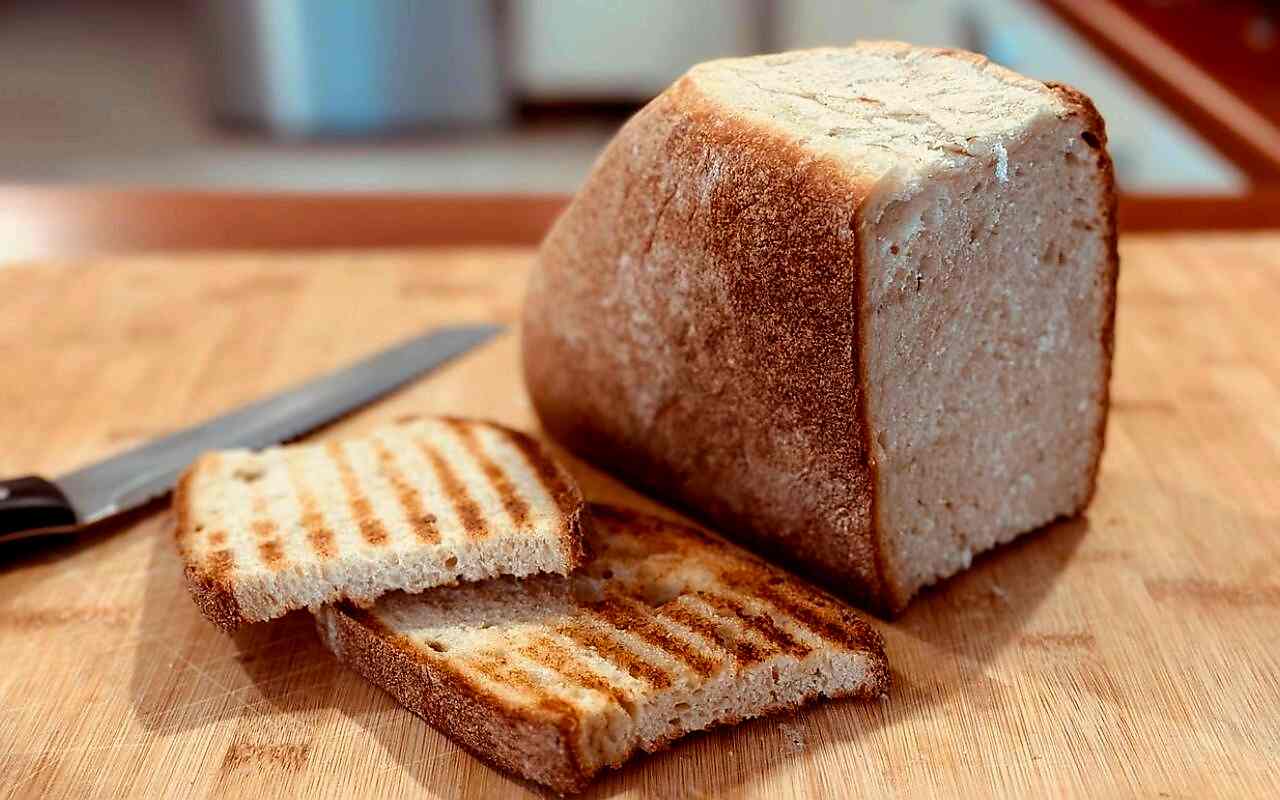
If you are looking to bake a rustic loaf with a soft center and a crisp crust—the kind that cools on your kitchen counter and embodies the special charm of homemade farmhouse bread—then “Hearth Farmhouse Bread” is the perfect choice for a truly authentic homemade experience.
Table of Contents
Hearth Farmhouse Bread: A Rustic Loaf with a Soft Center
There is nothing quite like the feeling of baking farmhouse bread at home, with its soft center and warm, yeasty aroma. This easy farmhouse bread recipe is ideal for home bakers who want a rustic loaf without the complexity of sourdough techniques or the need for special equipment.
The dough uses simple pantry staples—bread flour, salt, yeast, a touch of honey, butter, and water—and follows a straightforward process of rising, shaping, proofing, and baking.
Traditional farmhouse loaves vary widely; some incorporate whole wheat or rye flour, while others are made primarily with white bread flour. Many versions involve a two-stage rise and a hot oven to achieve a delicious crumb and an appealing crust.
This version yields a versatile loaf that is perfect for sandwiches, toast, breakfast, soup, grilled cheese, or simply enjoying with a spread of butter.
Why You’ll Love This Farmhouse Bread Recipe:
- Uses simple, accessible ingredients
- Perfect for beginners
- Delivers a wonderful rustic texture
- Great for making ahead
- Offers an amazing homemade taste
- The two-stage rising process is crucial, as it helps build the dough’s volume and structure before baking.
- This farmhouse bread rises until doubled in size, followed by shaping and a second proofing stage.
All the Ingredients:
Ingredients for one large Farmhouse Loaf:
- 2 tablespoons softened unsalted butter
- 2 1/4 teaspoons active dry yeast
- 4 cups bread flour, plus more for topping
- 1 tablespoon flour for finishing
- 1 teaspoon olive oil for the bowl
- 1 1/2 cups warm water, 105°F to 110°F
- 1 tablespoon honey
- 1 1/2 teaspoons kosher salt
- 1 teaspoon sesame or rolled oats, optional for topping
Ingredient Suggestions:
Bread Flour: Bread flour provides more gluten-forming protein. It’s perfect for creating a chewy structure. All-purpose flour also works well, but its texture is a little softer.
Yeast: Active dry yeast is excellent in this recipe. You can use instant yeast; it usually doesn’t require an activation step.
Honey: A little honey adds a slight sweetness that helps create a crust and a beautiful golden color.
Butter: Butter helps soften and add flavor to the bread without turning it into a brioche-style loaf.
Water: The water should be lukewarm rather than hot; too hot water harms the yeast.
How to Make Hearth Farmhouse Bread: Full Instructions
1. Activating the Yeast
- Use a small bowl.
- Add warm water.
- Add honey and active dry yeast.
- Keep mixing the mixture gently and let it sit for about 8 to 10 minutes.
- A light layer of foam should appear on the surface.
- If the yeast doesn’t activate, check that your yeast is fresh and the water wasn’t too hot or cold.
MORE RECIPE: –
Golden Custard Bread Pudding Bliss
Sunshine Lemon Glaze Shortbread
Cheese-Loaded Stuffed French Bread Boats
2. Mixing the Dry Ingredients
- Place the bread flour and salt in a large mixing bowl.
- Now whisk together to distribute the salt evenly.
- Make a well in the center.
- Pour the yeast mixture into the well and add the salt and butter.
- Use a wooden spoon or a sturdy spatula.
- Mix until a coarse dough forms.
- The flour may be loose at first. This is perfectly normal.
3. Kneading the Dough
- Place the dough on a lightly floured work surface.
- Now push the dough forward with your hands for about 10 minutes.
- Fold it back, then repeat the same process.
- The dough should gradually become smoother and more pliable.
- How to tell if the dough is ready?
- The dough should be soft and slightly sticky, but not sticking to your hands excessively.
- Do a simple stretch test.
- Use a small piece of dough and gently stretch it.
- If it stretches into a thin film before tearing, the gluten is well formed.
- Don’t add too much flour when kneading. Too much flour makes the finished bread dense and dry.
4. Rise the Dough
- Use a large bowl.
- Lightly oil it with olive oil.
- Place the dough inside and turn it once, lightly coating the surface.
- Cover the bowl tightly with plastic wrap, a lid, or a clean kitchen towel.
- Place it in a warm, air-tight place.
- Let the dough rise for about 60 to 90 minutes, until it doubles in size.
- The ideal time for rising depends on the temperature of the kitchen.
- Fermentation is faster in a warm kitchen, while it takes longer in a cold kitchen.
5. Shaping the Farmhouse Loaf
- When the dough has doubled, gently press it down to release excess gas.
- Turn out onto a lightly floured surface.
- Shape the dough into a ball or slightly oval loaf.
- Gently pull down the outside of the loaf to create a tighter surface and seal it with a seam.
- Place the shaped loaf on a parchment-lined baking sheet or in a lightly greased Dutch oven or loaf pan.
6. Second Proof
- Cover the dough with a clean kitchen towel.
- Let it rise for 35 to 45 minutes.
- The loaf will become quite puffy.
- Remember not to rely on a clock.
- The appearance and feel of the dough is a sign of readiness more than the correct time.
7. Marking the Hearth Farmhouse Bread
- Prepare the oven to 425°F, 220°C.
- Take a fresh loaf or use a serrated knife.
- Make a long cut.
- If you prefer a classic rustic look, you can make three diagonal cuts.
- Marking gives the dough a controlled space to expand during baking.
- Now lightly dust the top with flour.
- You can sprinkle sesame seeds or rolled oats if desired.
8. Baking Farmhouse Bread
- Place the loaf in the preheated oven.
- Continue baking for about 40 minutes, or until the crust is a deep golden brown.
- For a crispier crust, place a small heatproof container of hot water on the bottom rack of the oven during the initial baking time.
- This steam helps create a deeper crust.
- This is a technique used in traditional farmhouse bread recipes.
- Tapping the bottom of the bread should produce a hollow sound.
- When using an instant-read thermometer, the center temperature should generally be between 200°F and 210°F.
9. Cooling Before Slicing
- Remove the loaf from the oven and place it on the wire wrapper.
- Be sure to let it cool for about 40 to 60 minutes before slicing.
- This step is crucial, but the bread smells amazing.
- Slicing it while it’s still too hot can cause the crumb to become compressed and sticky.
- Once cooled, it’s much easier to cut the loaf into slices using a serrated bread knife.
Tips for storing Hearth Farmhouse Bread:
The cooled loaf should be stored at room temperature in a bread bag, bread box, or loosely wrapped in a clean kitchen towel.
For best texture, consume it within 3 days. Homemade bread should not be refrigerated unless absolutely necessary, as refrigeration causes the bread to become stale very quickly.
Can I freeze Hearth Farmhouse Bread?
Absolutely! If you want to take out individual portions, cut the thoroughly cooled loaf into pieces before freezing. Wrap the slices tightly and place them in a freezer-safe bag.
For best quality, refrigerate for up to 3 months.
Thaw at room temperature or toast frozen slices directly.
The best way to serve Hearth Farmhouse Bread:
Homemade bread works great.
For classic butter toast:
Toast thick slices and spread butter on them while they’re still warm.
For breakfast toast: Top with peanut butter and banana, scrambled eggs, avocado, or your favorite game, which is delicious.
For grilled cheese: Crumb farmhouse bread to make it sturdier makes it a great choice for grilled cheese sandwiches.
For soup and stew: Thick slices can be enjoyed with tomato soup, chicken soup, chili, or beef stew, which is simply amazing.
For French toast: Day-old farmhouse bread is especially great for French toast, as it absorbs the custard well and won’t break down immediately.
For sandwiches: Use for turkey sandwiches, ham and cheese, chicken salad, BLTs, or veggie sandwiches.
Garlic bread: Spread melted butter, parsley, garlic, and Parmesan on slices, then toast until golden brown.
Some expert tips for excellent farmhouse bread:
- Always measure flour carefully.
- Pay attention not only to the clock but also to the flour.
- The dough should not sink into the flour.
- Score with absolute certainty.
- Use parchment paper.
- Be sure to chill the bread.
FAQ
Answers to Hearth Farmhouse Bread Questions.
Q. Can I use all-purpose flour instead of bread flour?
Absolutely! All-purpose flour is fine, but the bread may be less chewy. You’ll need to adjust the water content slightly depending on the flour.
Q. What is farmhouse bread?
Farmhouse bread is a rustic-style homemade bread that traditionally has simple ingredients, a good texture, and a good crust. Recipes vary widely and may use white flour, wheat flour, rye flour, milk, butter, and seeds.
Q. Can I use instant yeast?
Absolutely! Stand yeast is usually mixed with dry ingredients. If the package instructions differ, follow them.
Q. Why doesn’t the dough double?
Common causes: inactive yeast, a cold kitchen, too hot or cold liquid, or a short rising time. Keep the covered dough in a comfortably warm, draft-free place and give it time.
Q. Can I make bread without a stand mixer?
Yes! This recipe is easy to knead by hand. A stand mixer makes the kneading process even easier.
Q. Can I add whole wheat flour?
Absolutely! For a healthier bread, you can add up to about 30% whole wheat flour to the bread dough. You just need a little more water.
Q. Can I add seeds?
Absolutely! You can use sunflower seeds, sesame seeds, pumpkin seeds, flax seeds, or oats as a topping or add them to the dough.
Q. Can I make farmhouse bread in a touch oven?
Absolutely! The touch oven bakes around the bread and helps create a crisp crust.
Final Thoughts
Hearth Farmhouse Bread proves that homemade bread doesn’t have to be scary. With yeast, flour, water, honey, butter, and salt, you can easily make a beautiful rustic bread with a crisp crust and a soft, satisfying center.
This recipe requires patience: knead the dough thoroughly and let it rise until it’s visibly puffed. The finished bread should be given plenty of time to rise, and be sure to chill before slicing.
Once you master this recipe, be sure to experiment with whole-wheat flour, oats, herbs, or roasted garlic to create your own signature farmhouse bread.
Fresh from the oven and served with butter, this easy homemade bread will soon become a favorite with your friends, guests, and family and could become a regular on the table, so be sure to give it a try.